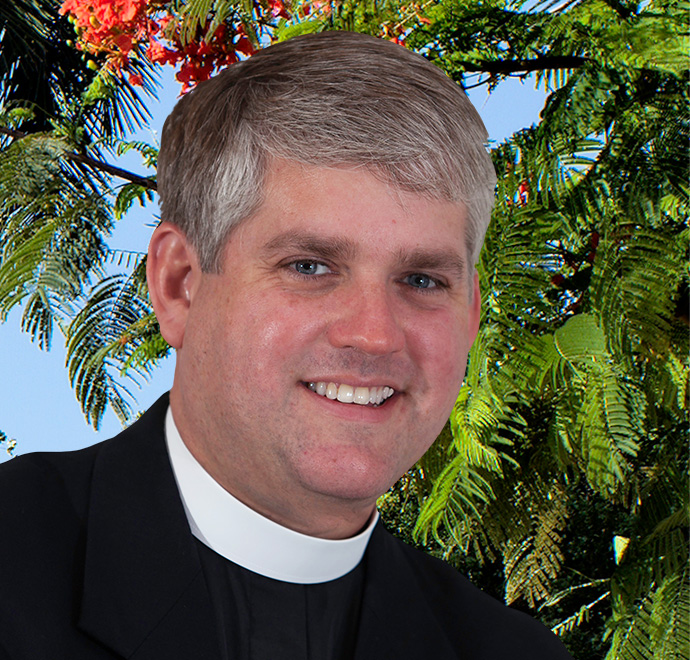
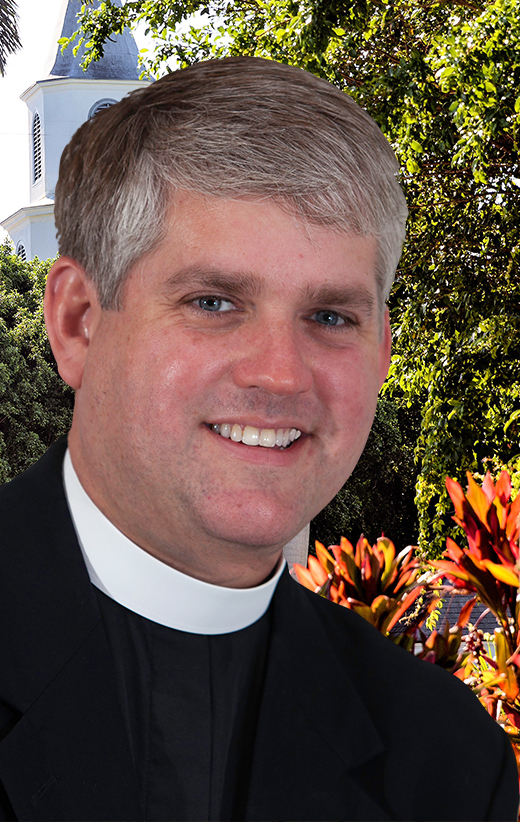
Father Edward is Trinity-by-the-Cove’s eighth Rector. Father Edward began his ministry at Trinity-by-the Cove as an Associate Rector for Youth and Family Ministries, continued as Senior Associate Rector and in May 2014 was called to be Rector. Before coming to us, Fr. Edward served as an assistant priest and chaplain in Baton Rouge, Louisiana at a church with a K-8th grade school. Before seminary, Fr. Edward received a BA in history from the University of Texas at Austin in 1996 and a J.D., cum laude, from Loyola University School of Law, New Orleans in 2000 where he served as Editor-in-Chief of the law review. Leaving the practice of law in 2005, Fr. Edward attended Nashotah House Theological Seminary receiving a M. Div., cum laude, in May 2008. A native of New Orleans, Louisiana, Fr. Edward has a wife, Virginia, and three young children, Howard, Eleanor, and Claire.
There is something electric about being a part of a Christian community that spends time together discerning God’s will for our lives and the world and at the same time simply enjoying being in fellowship with one another. Trinity-by-the-Cove is a thriving parish with wonderful and varied opportunities to love God and neighbor.
As an ordained priest, I am privileged to spend my life serving God’s people. I believe that ministry—whether ordained or not—should be personal and filled with love. That ministry is expressed through talking to people about God and sharing the powerful presence of Jesus in times of overwhelming joy and tremendous sorrow. Remembering daily how God is at work in the world and in each of our lives excites me. It’s also exciting to lead Trinity-by-the-Cove in its mission and ministry to be a loving and compassionate environment for the continuing transformation of a life in Christ Jesus.
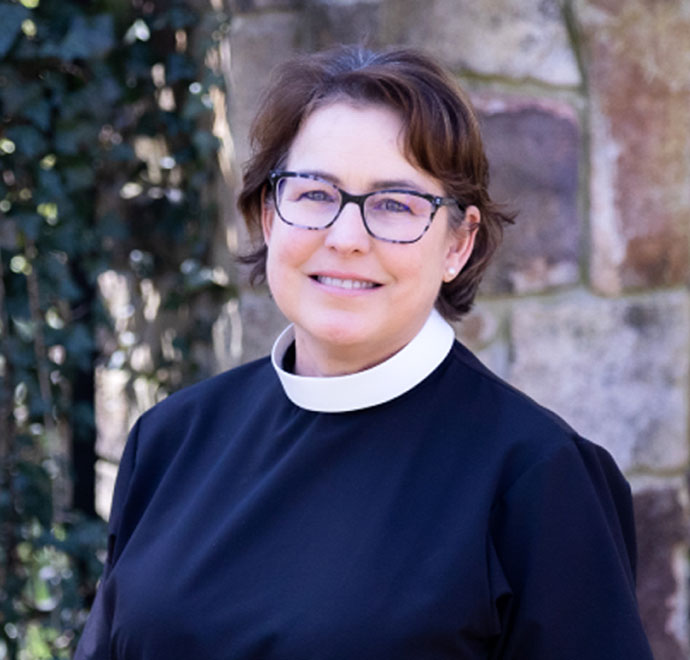
Marcella comes to Trinity-by-the-Cove having earned a Master of Divinity from The School of Theology at the University of the South in 2021. She also received a B.S. in Natural Resources from the University of the South in 1984. In the intervening years, Marcella worked in the field of environmental science and management, taught high school science, and worked several years in an addictions counseling office. Marcella is a native Floridian, having grown up and lived on the west coast of Florida most of her life. Marcella has a son, Benjamin and two stepchildren, Christopher and Mary, and four grandchildren. She is well-managed by Charley, her Cavalier King Charles Spaniel, who has his own kitty, LilyBelle.
Trinity-by-the-Cove is a parish family that is committed to bringing the love of Jesus Christ and hope of the resurrection to the world. I am excited about the meaningful opportunities for worship, and our engagement and experiences with scripture in weekly Bible study. I also enjoy the happy nature of our parish as we spend time together appreciating God’s creation here in Naples.
I love God and I love his creation! The central piece of my ministry is to listen with intention to the needs of people and to be attuned to the call of the Holy Spirit within the church and in the world. It is exciting to see how the Spirit leads parishes in ministry and to be a part of the church’s response to God’s call.
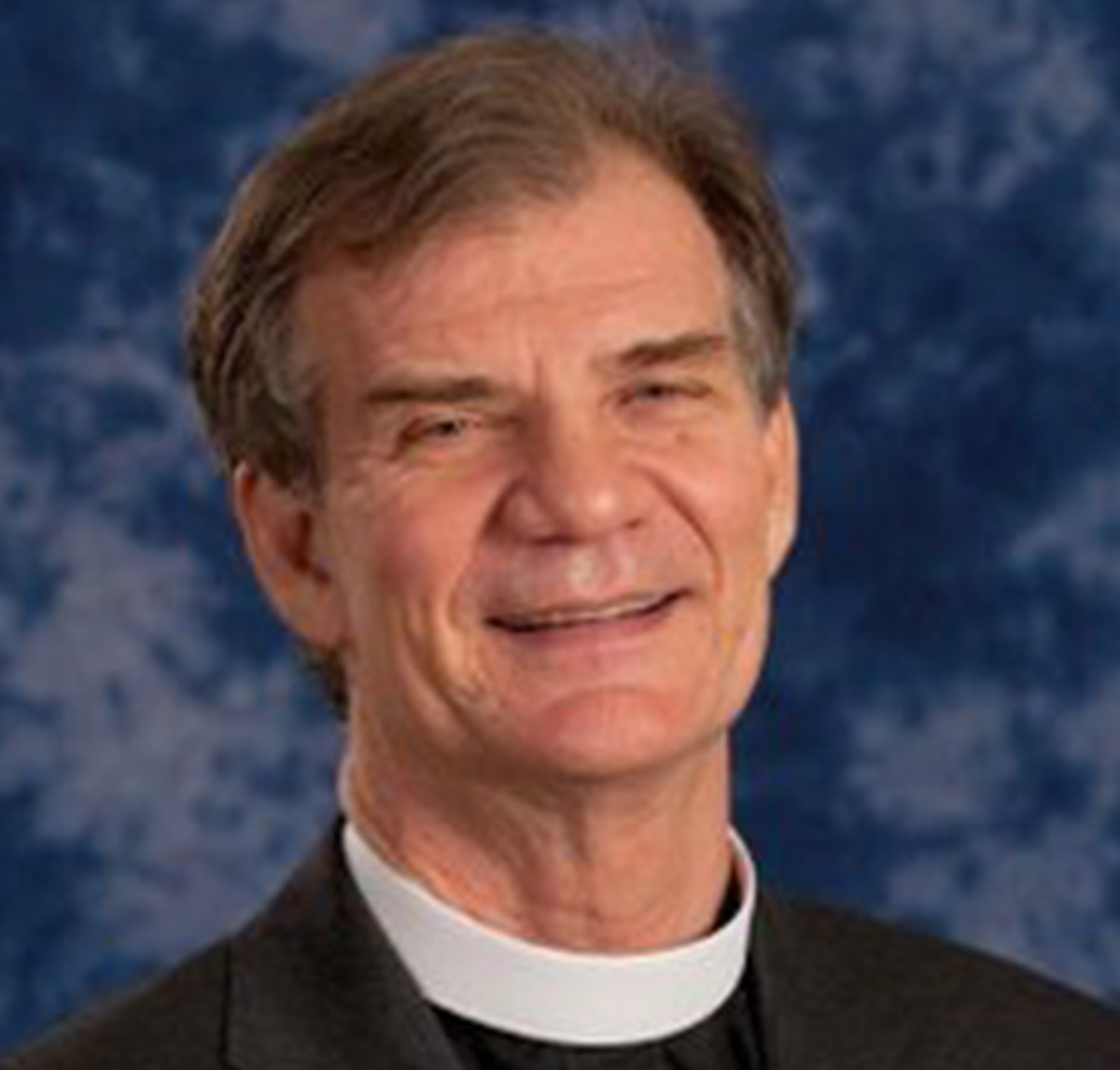
Father Steve is an assisting priest at Trinity-by-the-Cove. After graduating from Virginia Theological Seminary in 1978, Fr. Steve served as a curate at St. Marks, Palm Beach Gardens, and in 1980 he became Rector of All Saints, Grenada, Mississippi where he fostered a ministry of outreach to the neediest people in the community and expanded his interest in adult formation. In 1986, Fr. Steve became Rector of the Chapel of Saint Andrew in Boca Raton, where he developed “The Faith-Seeking Journey” a program of new member ministry.
Most recently, Father Steve served as Priest-in-Charge of Grace and St. Stephen’s Church in Colorado Springs, where he was elected Rector in 2011, and served until his retirement in 2014.
His duties at Trinity-by-the-Cove include assisting with pastoral care and sharing his Faith-Seeking Journey program with us for Adult Formation later in the fall. Fr. Steve has a wife, Kathy, and one son, Jonathan, who lives with his wife, Paulita in Colorado Springs.
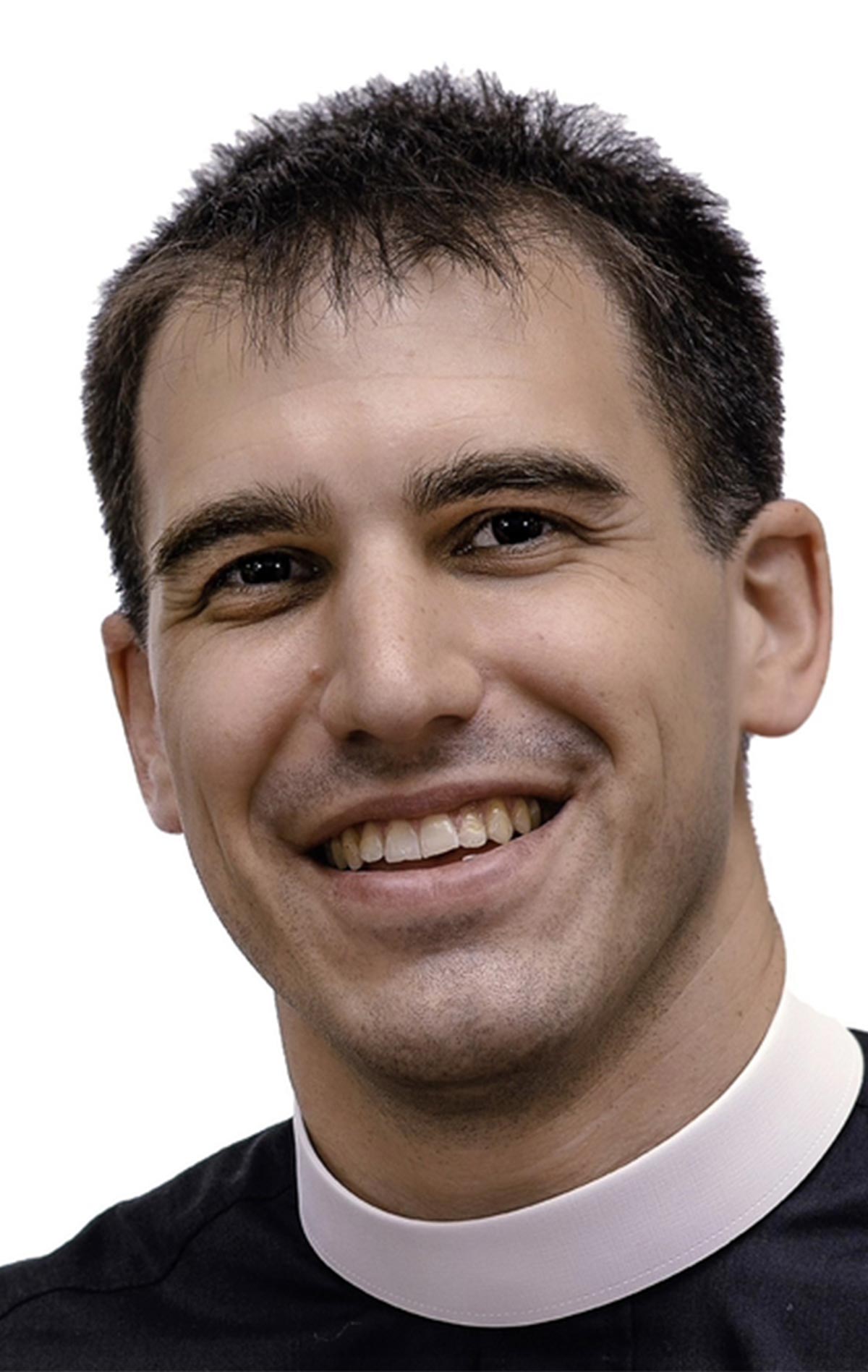
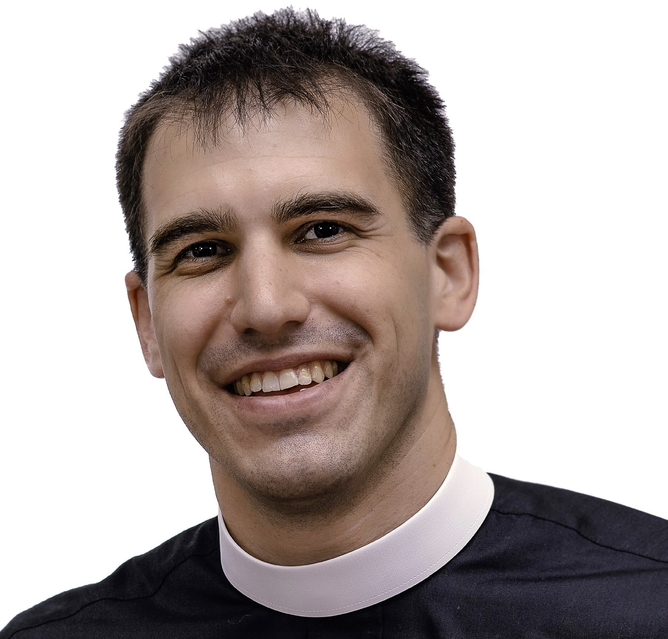
Nicholas comes to Trinity-by-the-Cove having earned a S.T.M. from The School of Theology at the University of the South in 2018. He also received a B.A. in philosophy and music from SUNY Geneseo in 2005 and a M.A. in theology from Gordon-Conwell Theological Seminary in 2008. In the years between his two stints at seminary, Nicholas stayed home to care for his first daughter, taught in the philosophy department at Christopher Newport University, and discerned God’s call to parish ministry. Nicholas and his wife, Jessica, grew up in the northeast, having lived in New Jersey, upstate New York, and Massachusetts, and, most recently, in Virginia and Tennessee. They have two daughters, Julia and Hannah.
From my very first encounter with Trinity-by-the-Cove, I was deeply moved by the idea of a community committed to living in to the fullness of our life in Christ through beautiful worship, excellent teaching, warm hospitality and fellowship, and compassionate service to others. It is truly exciting, however, to see this vision as a lived reality in the parishioners and staff at Trinity-by-the-Cove.
God has acted decisively in Jesus to bring about his kingdom. He also continues to act in and through his people to spread its influence both in our lives and in the larger world. It is exciting to play a role in God’s unfolding story of salvation and to walk alongside fellow Christians as we see, more and more each day, God working in our lives to accomplish his good purposes.
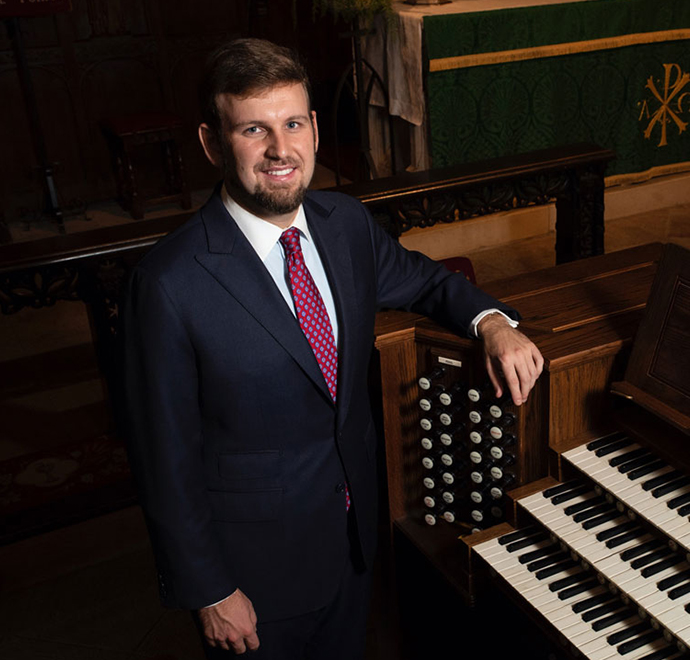
Dexter “Tripp” Kennedy began as Director of Music at Trinity-by-the-Cove as Director of Music in September 2021. Before coming to Naples, he worked for seven years as the Assistant Director of Music and Organist of Christ Church in Grosse Pointe Farms, Michigan. In 2014 he won first prize in the Grand Prix de Chartres organ competition at Notre Dame in Paris, one of the world’s oldest and most prestigious organ competitions. He is a well known organ recitalist, having performed throughout the United States and Europe. Tripp holds a Masters degree from Yale University, and an Artist Diploma and Bachelor’s from the Oberlin College Conservatory of Music.
Trinity-by-the-Cove is an amazing community full of friendliness, curiosity, intellect, and talent. The sense of hospitality both within the parish as well as the great work Trinity does in the community is inspiring to be a part of. I am lucky to be able to serve a congregation with such a history and appreciation of first rate sacred music!
Sacred music has been an integral part of Christian liturgy and worship for over 1,000 years. Therefore the music in liturgies must be chosen with intentionality so that all of the components of the worship service intertwine with one another to form a cohesive liturgy. As a musician, one is a lifelong learner, and this is also true about one’s faith journey. I take pride in using music as a vehicle for people to explore and elevate their own faith journeys.
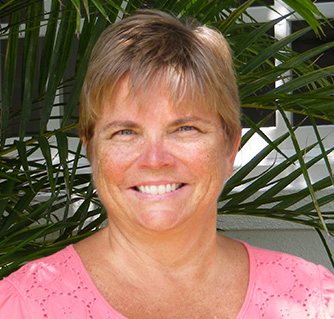
Before coming to Trinity by-the-Cove as the Director of Catechesis of the Good Shepherd, Linda was an elementary school teacher and Media Specialist for 28 years. Her love of Catechesis of the Good Shepherd (and Trinity by-the-Cove) began in 1999 when Trinity hosted training for Catechesis of the Good Shepherd. Linda and her husband, Tom, have 3 children and love escaping to the beach for reading and relaxation whenever possible.
Trinity by-the-Cove is very intentional about welcoming all people of all ages. When young families visit and see the atriums (rooms) for Catechesis of the Good Shepherd, they are immediately attracted to our children’s formation program. Trinity by-the-Cove also plans their services around the formation hours so children may attend worship. Intergenerational events are held quarterly so there is a relationship of acceptance and support within all age groups, and young family socials are held each month to further build community and lifelong friendships.
“Let the little children come to me…” Matthew 19:13
From a very young age, I believe God has called me to work with children. I find my joy and peace through relationships with others, so am particularly grateful to Catechesis of the Good Shepherd which not only uses my gifts but also continues to bless me and the children as we fall in love with Jesus the Good Shepherd. I have other sheep that do not belong to this fold. I must bring them also, and they will listen to my voice. So there will be one flock, one shepherd.” John 10:16
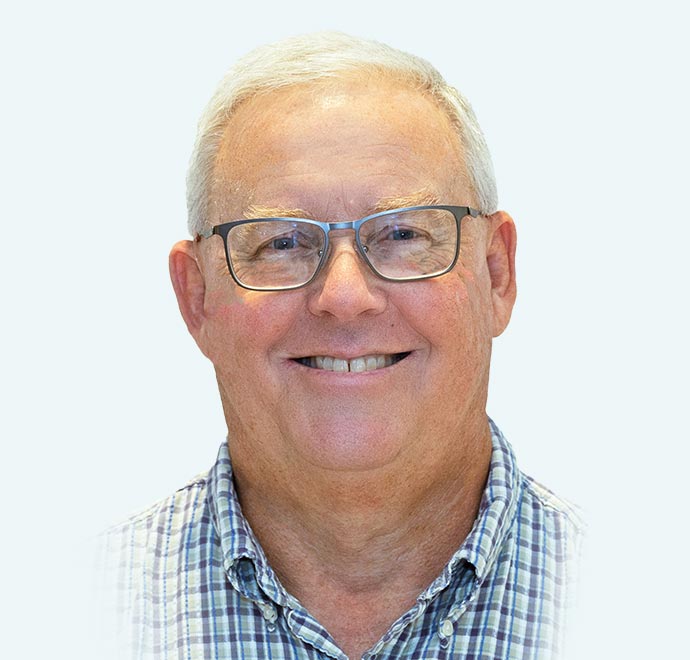
Tom is a retired public school system School Counselor, with several years of experience in Collier County, working primarily in schools with disadvantaged populations. Tom also served for 9 years as parish administrator at Emmanuel Lutheran Church, here in Naples, as well as working with Grace Place, one of Trinity’s partner agencies. He is happy to be able to be on the staff at Trinity, helping in a part-time role, with Parish Life Coordination and Volunteer Management. His wife Linda is also a part-time staffer, and they enjoy working together!
The friendly and welcoming parish family at Trinity shines brightly, and the breadth of offerings in worship, fellowship, service and formation are a blessing to many. My association with Trinity has always been highlighted by our strong outreach to this community, allowing our parish family to support the significant work being done in our area to help those who have needs in various ways. In addition, the Waterfront Worship, Rite III service is a favorite way to worship God through music and liturgy.
In my role, I have enjoyed getting to know so many Trinitarians, and helping them in their faith journey by connecting them to the ministries, events and opportunities offered in the parish. In working with volunteers, for worship roles, special events and more, I have come to see the depth of parish members’ servant hearts, in their willingness to serve God through their spiritual gifts.




 239.262.6581
 553 Galleon Drive, Naples, FL 34102
 info@trinitybythecove.com
Please call me with more information about ways to get involved.
